Hardtochooseone Split Ergonomic Mechanical Keyboard, QMK, 36-Key, USB-C Review (2026)
Updated September 14, 2026 · Research-based review
Our verdict
This Hardtochooseone split keyboard suits enthusiasts who want a fully assembled, QMK-programmable 36-key board without building one from a kit. It arrives ready to use with keycaps and switches included, but the minimal 36-key layout and an unfamiliar brand name mean buyers should expect a learning curve and limited support history.
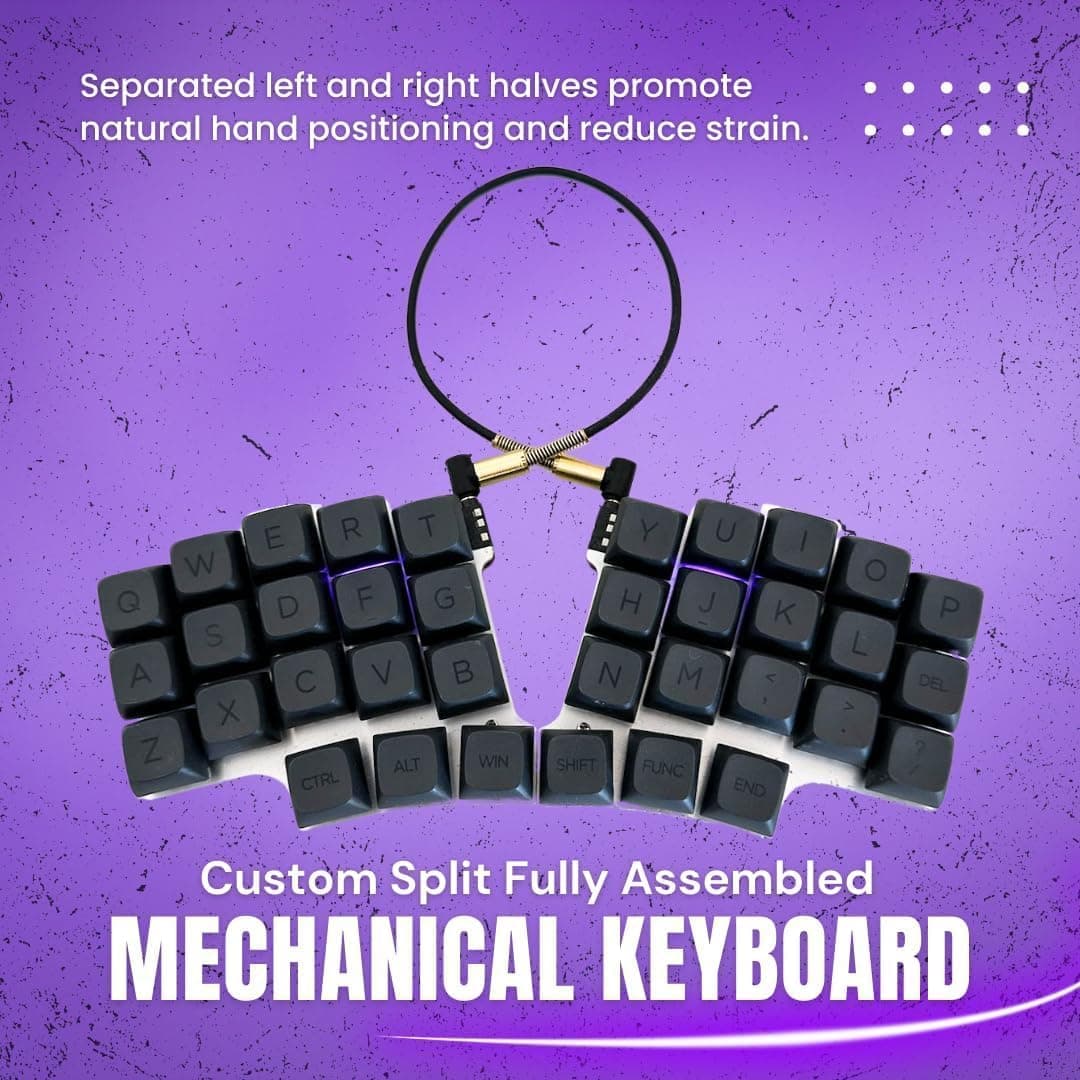
Hardtochooseone split ergonomic mechanical keyboard with QMK firmware, 36-Key layout and USB-C, a minimalist enthusiast board.
Price range: See on Amazon
What we liked
- + QMK firmware lets you remap every key and layer
- + 36-Key layout keeps fingers close to home row
- + USB-C connection is modern and reversible
Trade-offs
- - 36-Key layout requires memorizing layers for numbers and symbols
- - Unusual brand name offers little support history
Who this minimalist split keyboard is for
This board is aimed at keyboard enthusiasts who already want a small, column-staggered split keyboard and are specifically looking for one that arrives fully assembled rather than as a kit requiring soldering, since the listing states it comes fully assembled with keycaps and switches included. Its 36-key layout is even more minimal than many split boards, which typically use 40 or more keys, so it appeals most to typists who are comfortable relying heavily on programmable layers for numbers and symbols. It is not a good starting point for someone who has never used a split or minimal keyboard before, since the jump from a full-size layout to 36 keys is significant.
QMK firmware and hardware explained
The keyboard runs on QMK, an open source firmware standard also used across many mechanical keyboard kits, which lets an owner remap every key and build custom layers for missing keys like numbers and function rows. It supports standard MX-style mechanical switches in a hot-swappable socket, so switches can be changed without desoldering, and it includes RGB backlighting that can be customized through the same firmware tools. Connectivity is wired over USB-C. The listing describes the board arriving fully assembled with keycaps and extra switches included in the box, which removes the build step that many split keyboard kits require, a meaningful difference for buyers who want a split board without doing their own soldering.
What daily use with only 36 keys is like
Living with a 36-key board means accepting that numbers, symbols, arrow keys, and most function keys live on held layers rather than dedicated keys, so the first days of use involve regularly checking a keymap reference until the layout becomes automatic. Because the keyboard is hot-swappable, an owner can experiment with different switch feels over time without needing a new board, which is a practical way to fine-tune comfort after the initial layout learning curve. The split, column-staggered shape is intended to reduce wrist and finger strain compared with a traditional single-piece keyboard, a benefit widely reported by users of similar split layouts, though it depends on correct hand positioning and takes time to feel natural.
Trade-offs against other split ergonomic keyboards
Compared with a 60 percent hot-swappable split keyboard that keeps a full alphanumeric row and dedicated number keys, this 36-key board asks for a much steeper adjustment since even more keys move to programmable layers. A board like the R-Go ergonomic split keyboard, which uses a scissor mechanism and two-part design without dropping to a minimal key count, is easier to pick up quickly for someone new to split keyboards. What this Hardtochooseone board offers in exchange is a smaller footprint, full QMK programmability, and the convenience of arriving assembled rather than as a build-it-yourself kit, appealing specifically to buyers who already know they want a minimal layout.
Verdict and who should look elsewhere
This keyboard is a reasonable pick for enthusiasts who specifically want a fully assembled, hot-swappable 36-key split board with QMK programmability and do not mind an unfamiliar brand with limited support history. It is a poor choice for anyone new to split or minimal keyboards, or for buyers who want dedicated number and function keys without relying on layers. Shoppers in either of those situations should look at a split keyboard with a fuller key count, or a more established brand with a longer support track record, instead of this minimal 36-key board.
Frequently asked questions
Does this keyboard come pre-assembled?
Yes, the listing describes it as coming fully assembled with keycaps and switches included, rather than needing to be built from a kit.
Can the switches be swapped after purchase?
Yes, it uses hot-swappable sockets compatible with standard MX-style mechanical switches, so switches can be changed without soldering.
What firmware does this keyboard use?
It runs on QMK, open source firmware that lets owners remap keys and build custom programmable layers for the missing number and symbol keys.
Is 36 keys enough for regular typing?
It can be, but it requires learning programmable layers for numbers, symbols, and function keys, so it suits users willing to adjust to a minimal layout rather than casual typists.
Prices change often, so check the current price and availability on Amazon.
Check price on AmazonDesk Upgrade Nest may earn a commission from the link above.