Triangle Corner Desk vs L-Shaped Desk: Which One Fits Your Room?
Published How we research
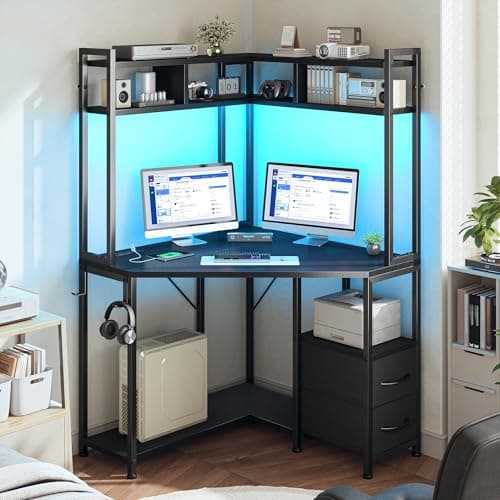
Choose a triangle corner desk if you have a small corner and one or two screens, and an L-shaped desk if you need two separate work zones and have roughly 5 by 5 feet of wall space to give up. A triangle desk packs a deep, angled surface into the least floor area, while an L-shaped desk spreads two long arms along the walls and leaves the corner itself as a shared zone. The right shape depends on your corner measurements, how many screens you run and whether you need paperwork space next to the computer.
Products from this article
The highest-scoring picks from the buying guides this article links to. Scores are our editorial assessment, not customer ratings.
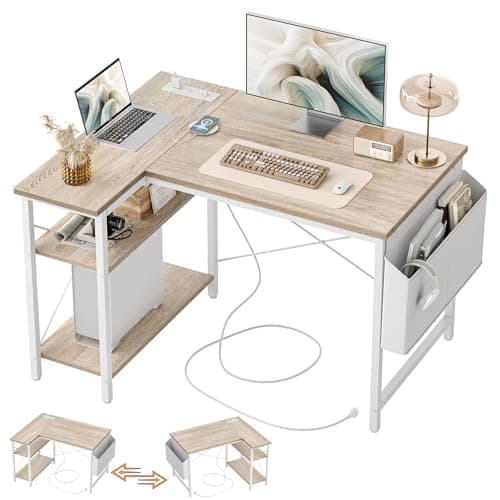
+ Built-in power strip with two AC outlets, one USB port and one Type-C port keeps charging cables off the floor.
From our guide: Best Corner Desks for Home Offices (2026)
+ 5 drawers plus a cabinet hold files and supplies without a separate storage unit
From our guide: Best L-Shaped Desks for Home Offices (2026)
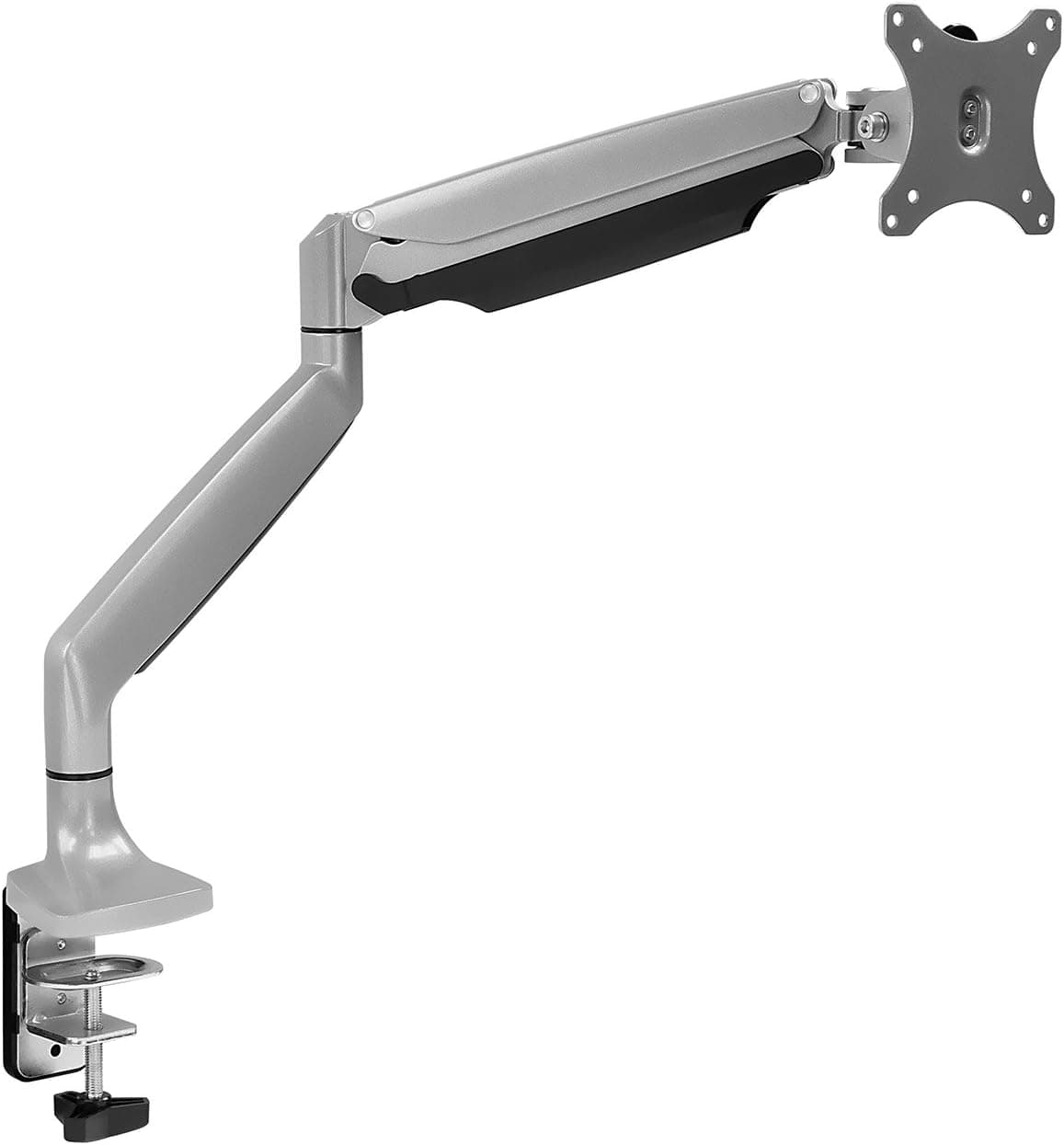
+ Gas spring lets you lift or lower the screen with a light push
From our guide: Best Single Monitor Arms for Home Offices (2026)
+ Desktop is listed as holding two 24 inch monitors or a single 27 inch monitor
From our guide: Best Corner Desks for Home Offices (2026)

What each desk shape actually is
A triangle desk, often sold as a triangular or corner workstation desk, is a single wedge-shaped top that fills a 90 degree corner. Its two back edges sit against the walls and the front edge is a straight diagonal or a gentle curve. Many models add a keyboard tray or a hutch shelf above.
An L-shaped desk is two rectangular surfaces joined at a right angle. One arm is the main desk, the other is a return that holds a printer, a second computer or paperwork. Most are reversible, so the return can go left or right depending on the room.
A third variant, the curved or bow-front corner desk, behaves like the triangle but trades the sharp front corners for a smoother edge. It is easier on forearms and hips when you walk past, though the curve wastes a little surface at the sides.
Footprint and how much room each takes
Triangle desks usually run about 40 to 60 inches along each wall edge. That makes them the compact option for a bedroom corner, a dorm or a closet office. The trade-off is that the open area of the top is a wedge, so the center is deep but the edges taper away.
L-shaped desks commonly measure 47 to 66 inches on the main arm, with a return of roughly 36 to 48 inches. They need clear wall length on both sides and enough floor to pull the chair out. If the room is narrower than about 7 feet, an L-shape can make walking past the chair awkward.
Usable surface depth and monitor distance
Depth decides screen comfort more than width. A triangle desk gives you a deep point where the screen can sit comfortably far back, often 30 inches or more from the front edge to the corner. That works well for a single large monitor or an ultrawide, because you can keep the screen at roughly an arm's length from your eyes.
A standard L-shaped arm is 24 to 30 inches deep. That is fine for one or two monitors on stands, and a monitor arm clamped to the rear edge will free up even more of the surface. On either shape, check the listing's stated depth before buying rather than assuming.
Which layout suits which kind of work
Pick the triangle shape for a single-screen workflow: browsing, writing, spreadsheets or gaming with everything inside a short reach. Everything sits within a short arc of your hands, which cuts down on stretching, but there is little room to spread documents out.
Pick the L-shape if you switch between tasks. The main arm holds the computer while the return holds a laptop, a drawing pad, a printer or a pile of paperwork. Some people put a standing desk converter or a second monitor on the return and rotate the chair between the two zones.
If you work from home full time and also keep a laptop for meetings, the L-shape usually wins on flexibility. If the desk is mainly for evening use or study, the triangle's reach advantage and smaller footprint make it the calmer choice.
Cable routing, storage and assembly
Both shapes sit against walls, so cables run to the corner outlet easily. Look for grommet holes or leave a gap at the back for a power strip. A cable tray under the top keeps the wedge or the return tidy.
Triangle desks often add a hutch, which is useful for storage but raises the top of the unit and can crowd a low ceiling or a window. L-shaped desks sometimes include drawers or shelving on the return. Assembly for both is typically a two-person job with many panels, so read the listing for included hardware and weight limits.
Weight capacity is worth reading in the listing. A deep wedge top with a hutch loads the rear corner, and a long L arm with two monitors can sag at the far end without a center support leg or brace.
Measure before you choose
Measure both wall lengths from the corner at desk height, and note baseboards, outlets, windows and radiators, which can stop a desk from sitting flush. Then add about 36 inches of clear floor in front of the desk for the chair.
Mark the outline with painter's tape on the floor and sit in your chair inside it for a minute. If you can reach both edges without leaning, the triangle fits. If you feel boxed in or want the second zone, tape out the L instead.
Frequently asked questions
Is a triangle desk good for two monitors? It can be, if the angled front is wide enough. Check the listed edge lengths against your monitors' widths, and angle the screens toward each other or use a dual monitor arm to save space.
Is an L-shaped desk the same as a corner desk? Not exactly. A corner desk is any desk designed to fit a corner, and that includes triangle, L-shaped and curved models. People searching for corner desks usually want the smallest option, which is often the triangle.
Can an L-shaped desk go in the middle of a room? Yes, as long as there is room behind it. It then works as a divider, but cables need a floor cord cover or an under-desk tray.
Which shape is easier to move? Triangle desks are typically lighter and smaller in total, but both break down into panels. Check the listed weight and whether the frame can be reconfigured later.
Popular right now
- Best Ergonomic Split Keyboards (2026)Buying guide
- Best Under-Monitor Storage Organizers (2026)Buying guide
- Best Monitor Privacy Filters (2026)Buying guide
- Best Corner Desks for Home Offices (2026)Buying guide
- Best UPS Battery Backups for Home Offices (2026)Buying guide
- Docking station explainedGlossary
Based on the last 28 days of search and visitor data.